
Stone Facade Repair NYC
Limestone trim, brownstone fronts, and granite bases give NYC buildings their character, and they fail in their own ways. We repair delaminating, cracked, and loose stone with methods matched to each stone type.
How to Recognize a Stone Facade in NYC
Stone shows up on NYC buildings as full fronts, as trim around windows, or as heavy bases and cornices. These clues help you tell which stone you have.
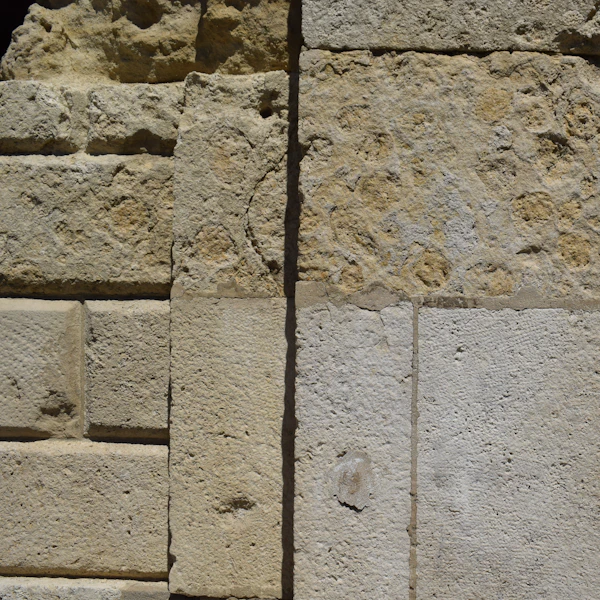
Large Cut Blocks
Stone units are far bigger than brick, often two to four feet long, with thin joints between them.
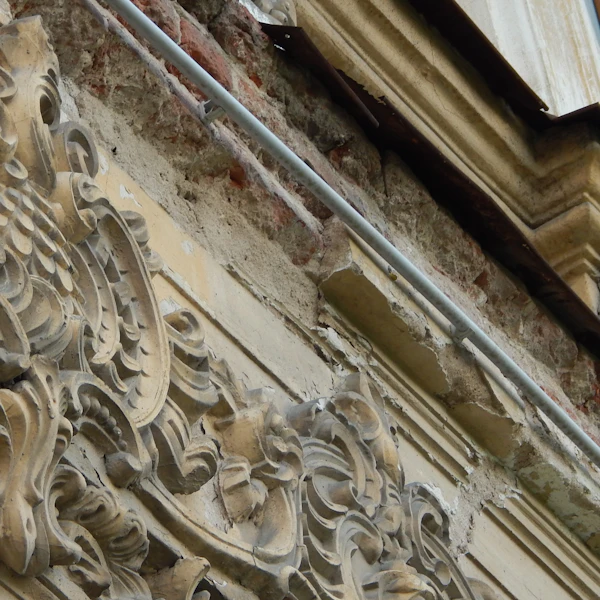
Carved Trim and Cornices
Window surrounds, sills, belt courses, and cornices are carved from solid stone pieces.
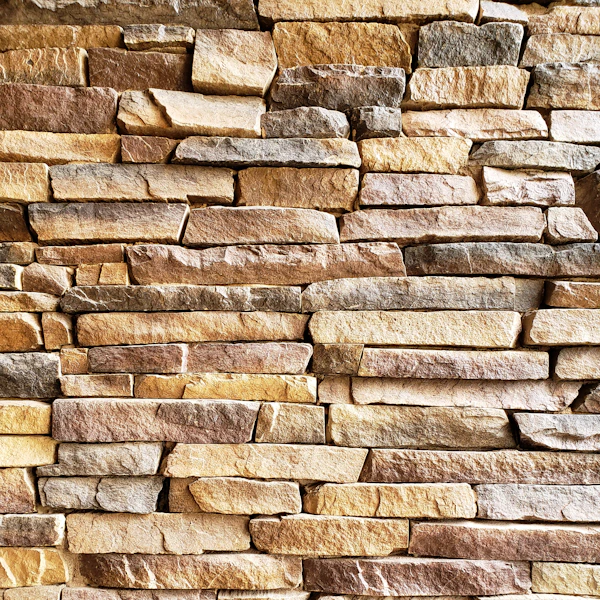
Layered or Speckled Texture
Brownstone shows layers like pages of a book, limestone looks even and sandy, and granite is speckled and hard.
Stone Facade Repair Under New York City Local Law 11 Explained
Stone facade repair fixes the limestone, brownstone, and granite conditions in a Local Law 11 report. Common work includes removing loose stone, patching spalls with restoration mortar, setting dutchman pieces of new stone, pinning cracked units back to the wall, and repointing open joints.
Stone pieces are heavy, so a loose cornice or sill is almost always rated Unsafe and needs a sidewalk shed right away. On landmarked buildings, stone repairs also need Landmarks Preservation Commission approval, and we prepare the material samples and methods that review asks for.
Common Local Law 11 Findings on NYC Stone Facades
Open joints between stone units that let water reach the anchors.
Brownstone faces peeling away in layers along the bedding planes.
Spalled corners and edges on limestone sills and lintels.
Cracked stone over rusting iron cramps and anchors.
Loose or displaced cornice and belt course stones.
Inside a NYC Stone Facade Wall
Stone on most NYC buildings is a facing, not the whole wall. It is set against brick backup and held in place by metal anchors, which is why rust behind the stone causes so many cracks.
- Stone FacingLimestone, brownstone, or granite units, usually four to eight inches thick.
- Mortar or Sealant JointsThin joints that keep water out and let the stone move with temperature.
- Metal Cramps and AnchorsIron or steel straps and dowels that tie each stone to the wall behind it.
- Collar JointA mortar filled space between the stone and the backup that can hold water.
- Brick BackupThe structural wall that carries the stone and holds the anchors.
How We Repair Stone Facades in NYC
Stone repair choices depend on how deep the damage goes and which stone you have.
Dutchman Stone Repairs
We cut out a damaged section and set a new piece of matching stone in its place.
Composite Stone Patching
Shallow spalls are rebuilt with restoration mortar tinted and tooled to match the stone.
Pinning and Re-Anchoring
Cracked or loose stones are pinned back with stainless steel anchors set in epoxy.
Stone Repointing
Open joints are cleaned out and refilled with mortar softer than the stone itself.
Stone Types We Repair on NYC Facades
Each stone weathers differently, so the repair method changes with the stone.
Step 1. Limestone Facade Repair
Even, sandy textured stone used for trim and full fronts. It wears at sills and cornices and cracks over rusting anchors. We patch, dutchman, and re-anchor it.
Step 2. Brownstone Facade Repair
A brown sandstone set with its layers facing out, so it peels in sheets. We remove loose layers and rebuild the face with matched restoration mortar.
Step 3. Granite Facade Repair
Very hard stone used at bases, steps, and columns. It rarely wears but cracks at anchors and opens at joints. We pin, reset, and reseal it.
Matching Limestone and Brownstone on NYC Repairs
Stone repairs only look right when color, texture, and tooling match. For patching we mix and cure trial samples beside the original stone and pick the closest one. For dutchman work we source stone from quarries that match the original type and finish, and we tool the surface to match the old face.
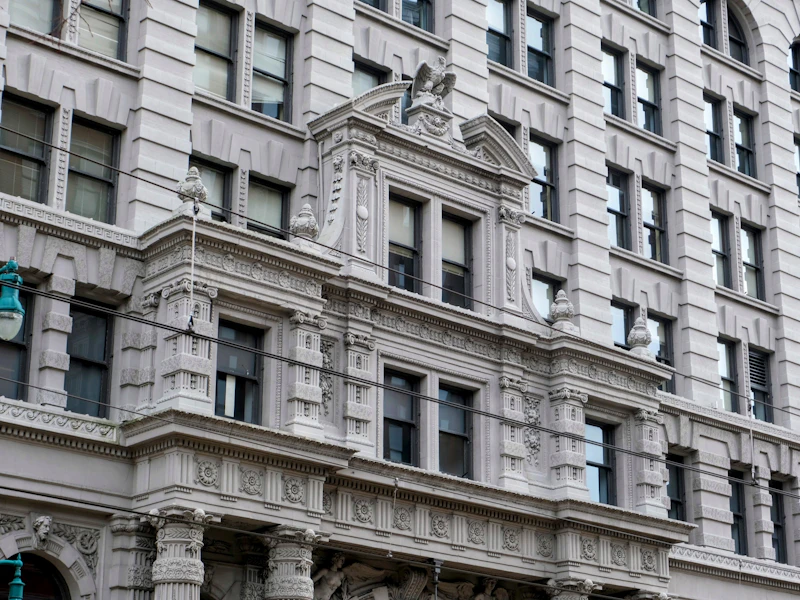

Access and Protection for Stone Facade Repairs NYC
Stone pieces are heavy, so access and rigging are planned before the first stone is touched.
Sidewalk Shed Protection
Our own sidewalk sheds go up as soon as loose stone is reported.
Scaffolding for Cornices
Our scaffolding reaches cornices and belt courses where stone work is heaviest.
Landmarks Approvals
For landmarked buildings we prepare samples and methods for LPC review.
Send Your Stone Facade Inspection Report
Send the FISP report and photos of the stone. We go through each listed stone condition and send back a free repair scope.
What Affects the Cost of Stone Facade Repair in NYC
Stone work varies more than most facade repairs. These five factors drive the scope.
- Patching versus full dutchman or unit replacement
- Stone type and how hard it is to source a match
- Number of anchors and cramps that must be replaced
- Cornice and belt course work high on the wall
- Landmarks review on designated buildings
Stone Facade Repair NYC FAQs
Brownstone is a layered sandstone that was often set with its layers facing the street. Water gets between the layers, freezes, and pushes them apart, so the face peels in sheets. Loose layers are removed and the face is rebuilt with restoration mortar.
A dutchman is a new piece of stone cut to fit a damaged area. The bad section is cut out with clean edges, the new piece is set with pins and adhesive, and the joints are pointed to match.
Usually. If the stone is sound but cracked, we pin it back with stainless steel anchors and fill the crack. If the crack comes from a rusting cramp, the cramp is removed or replaced first.
Yes, when the patching material matches the stone and is applied correctly. The Landmarks Preservation Commission reviews samples and methods before work starts.
Loose pieces are removed by hand from the scaffold or secured with netting and straps until they can be taken down. The sidewalk shed stays in place throughout.
Our focus is the facade conditions listed in your Local Law 11 report. Stoops and steps can be added to the same scope when they are part of the job.
Other NYC Facade Types We Repair
Repointing, lintels, shelf angles, and wall ties.
Spalled glazed units and trapped moisture.
Cracked units, rusted anchors, and cornices.
Panel joints, cracks, and hidden connections.
Spalls, rebar, balconies, and railing posts.
Cracked, bulging, or wet stucco and EIFS.